Every morning, millions of people reach for the same blue-and-white tube without a second thought. Toothpaste feels like the most settled product in the bathroom cabinet — foam, mint, rinse, done. But a growing number of people are asking a question that seems simple on the surface and turns out to be surprisingly deep: what am I actually putting in my mouth twice a day, for the rest of my life?
That question is why herbal Ayurvedic toothpaste has moved from niche wellness shelves to mainstream consideration. Here's an honest look at what changes when you switch — and why so many people don't go back.
What "Regular" Toothpaste Actually Contains
Conventional toothpaste was designed in an era focused almost entirely on one metric: cavity prevention. That's a legitimate and important goal, but it came with passengers most people never signed up for:
- SLS/SLES (Sodium Lauryl/Laureth Sulfate) — the foaming agent responsible for that satisfying lather. It's also a known irritant linked to canker sores and can strip the mouth's natural mucosal barrier.
- Synthetic preservatives and artificial dyes — added for shelf life and visual appeal, not oral health.
- Triclosan and other antibacterial agents — broad-spectrum killers that don't distinguish between harmful bacteria and the beneficial microbiome your mouth needs to stay balanced.
- Artificial sweeteners and flavors — engineered for a specific "clean" sensory experience rather than for gum or enamel health.
None of this makes regular toothpaste dangerous. But it does mean the formula was optimized for manufacturing efficiency and mouthfeel, not for working with your body's own systems.
What Ayurveda Brings to the Table
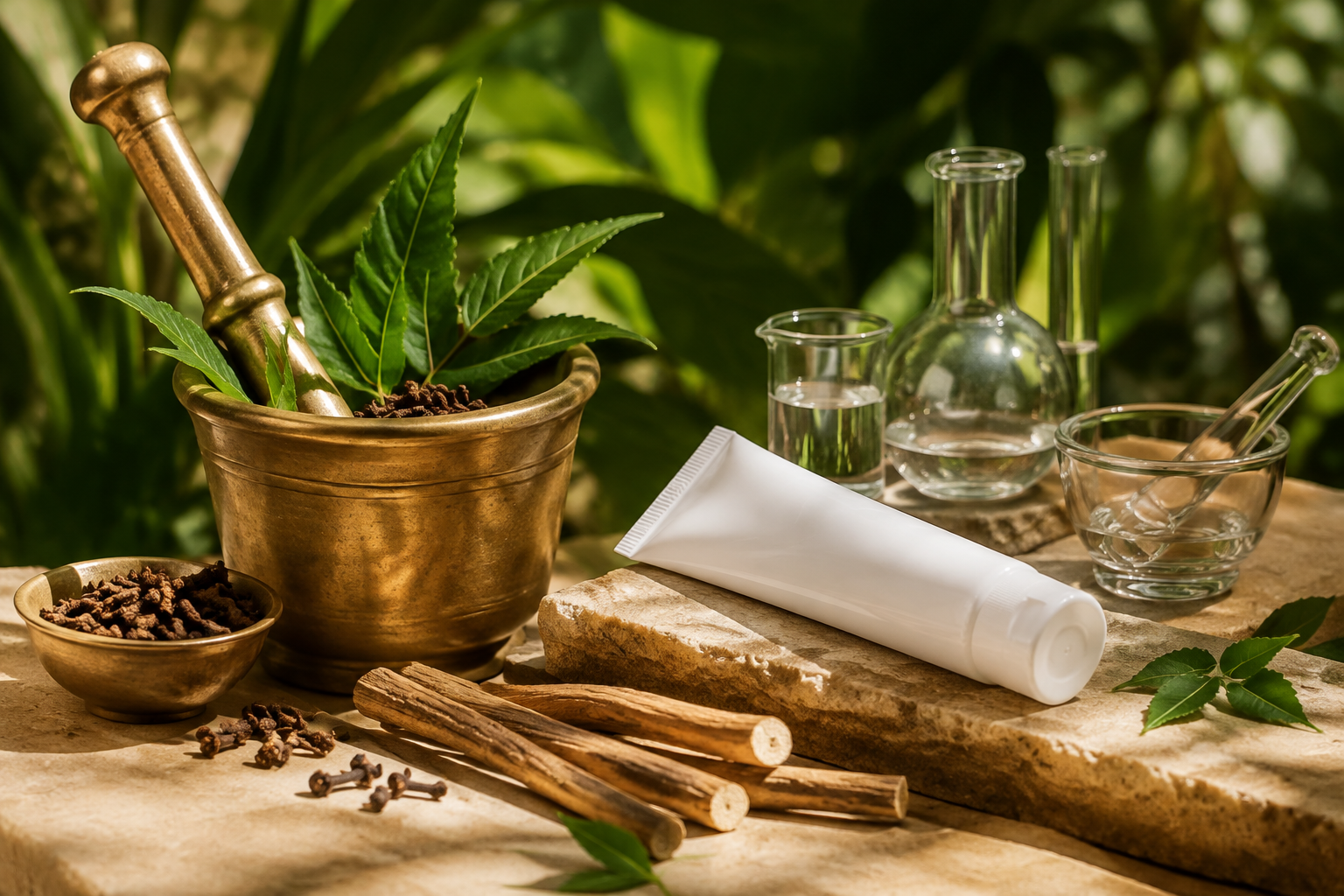
Ayurveda has spent over 3,000 years studying oral health as an extension of whole-body health — not an isolated cleaning task. That tradition shows up in ingredients that do more than one job at once:
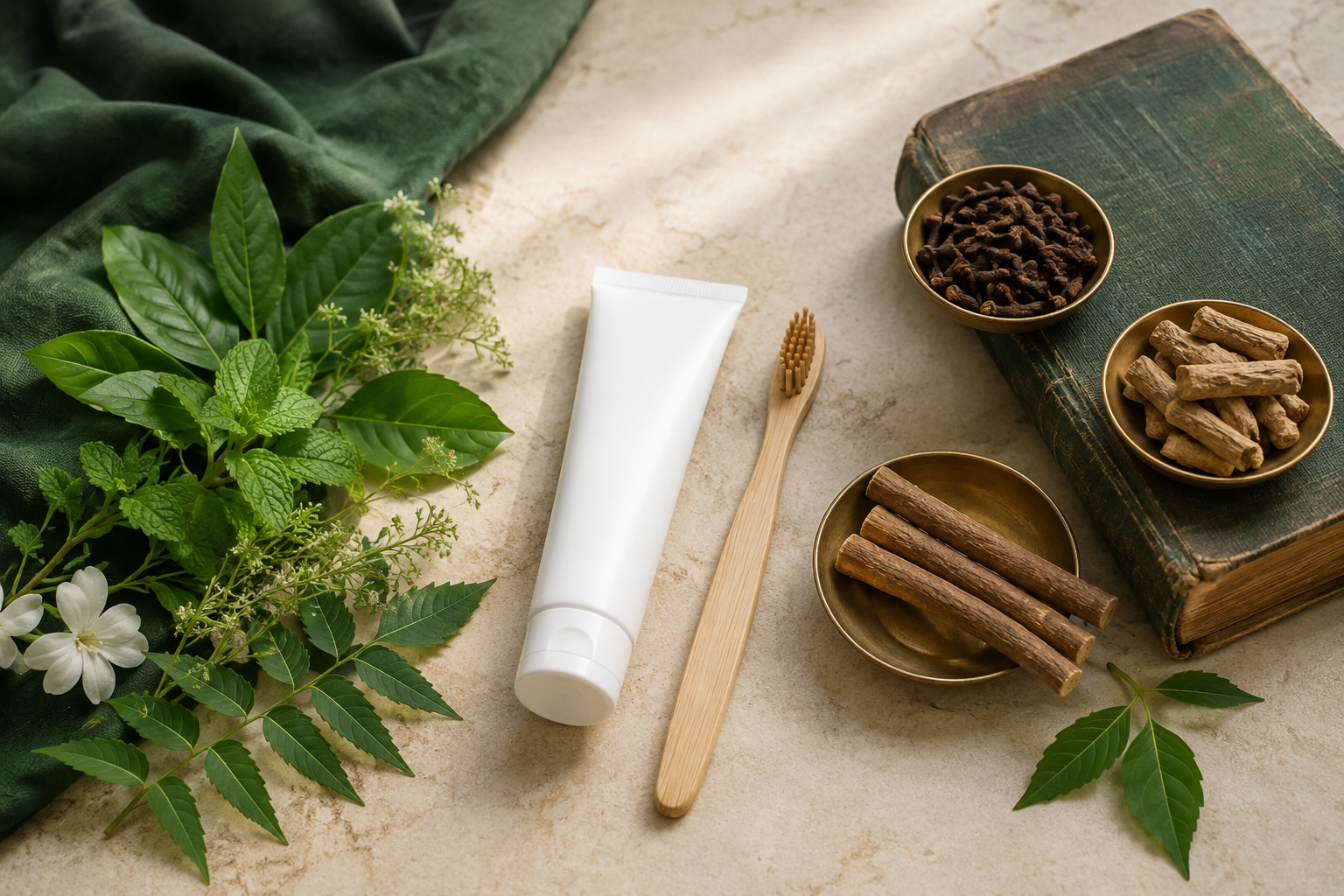
- Neem — used for centuries for its natural antibacterial and anti-inflammatory action on gums.
- Clove oil — a natural analgesic that soothes sensitivity and freshens breath without synthetic numbing agents.
- Licorice root (Yashtimadhu) — supports gum tissue and has a naturally sweet flavor that reduces the need for artificial sweeteners.
- Triphala — a classical Ayurvedic blend traditionally used to strengthen gums and balance oral pH.
- Babool (Acacia arabica) and Pomegranate — long used for astringent, gum-toning properties.
These aren't marketing buzzwords lifted from an ancient text for effect — they're ingredients selected because Ayurvedic medicine treats the mouth as a diagnostic window into digestion, immunity, and inflammation throughout the body.
The Real Difference: Formulation Philosophy
The biggest shift isn't any single ingredient — it's the underlying philosophy:
Why People Who Switch Rarely Go Back
The people who make the switch and stick with it usually report the same handful of changes: less gum sensitivity, fresher breath that lasts without a chemical aftertaste, and a general sense that their mouth feels "calmer" rather than stripped clean. For anyone managing sensitive teeth, receding gums, or a history of mouth ulcers, herbal formulations often feel like the first toothpaste that doesn't fight against them.
There's also a values dimension that shouldn't be underestimated. Choosing a fluoride-free, SLS-free, cruelty-free formula rooted in a documented medical tradition is, for many people, part of a broader decision to bring more intention into daily rituals — not just what they eat, but what they put on their skin and in their mouths.
Making the Switch
If you're considering a change, the transition is easy:
- Look for a formula that's genuinely SLS/SLE-free, not just "SLS-free" with a substitute sulfate.
- Check for a real ingredient list with named botanicals, not vague "herbal extract" blends.
- Give it 2–3 weeks — herbal formulas often work more gradually than the immediate foam-and-mint sensation you're used to, and that's by design.
Your mouth does a lot of work every day. It might be worth giving it something that was designed with more than a marketing meeting in mind.
VedaVaya's Ayurvedic oral care range is formulated in India using classical texts as the foundation and modern regulatory standards for safety — SLS/SLE-free, fluoride-free, and built around ingredients like neem, clove, and licorice root.